
Warpspace Moves from Funding Milestone to Global Optical Communications Development
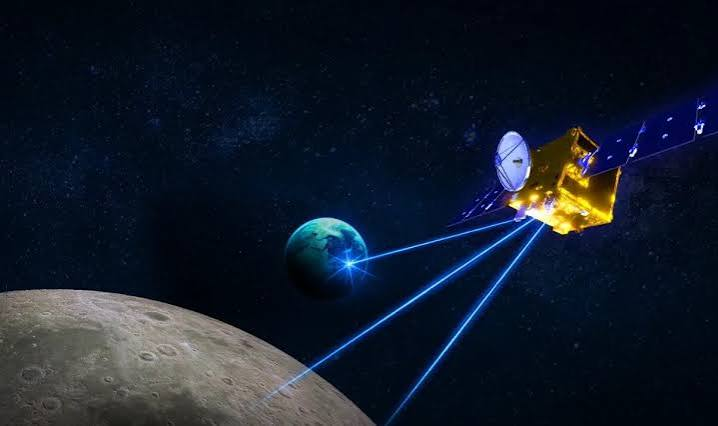
Seven months after our portfolio company Warpspace completed its Series C financing, the company has continued to expand its technology development and international partnerships as it works towards making optical communications a more widely adopted part of space infrastructure.
The January financing was led by the Space Frontier 2 Fund, with participation from existing investor Kohoku Kogyo and new strategic investors including ANA Trading, Toyota Invention Partners and Mobile Internet Capital. Warpspace said the funding would accelerate the commercialisation of its HOCSAI multi protocol optical communications modem and Digital Twin System, DTS.
From Capital to Commercialisation
Since the financing, Warpspace has continued to build the technology and partnerships required to bring optical communications closer to commercial deployment.
HOCSAI is being developed to enable interoperability between optical communication terminals using different protocols, while DTS provides a digital environment for simulating satellite behaviour, system interactions and communications performance. Together, the technologies are intended to reduce some of the technical and operational barriers currently limiting wider adoption of optical satellite communications.
The company has also been moving towards practical demonstrations and international interoperability. In September 2025, Warpspace signed an MoU with the University of South Australia and RapidBeam to integrate HOCSAI into the Australasian Optical Ground Station Network and test optical communication links against international standards.
A Growing Role for JAXA
One of the most significant developments since the Series C announcement has been Warpspace’s selection for a JAXA Space Strategy Fund programme focused on interoperability technologies for satellite optical communications.
Through the programme, Warpspace is developing technologies that allow optical terminals from different manufacturers to communicate with each other, while also developing pre launch evaluation capabilities through DTS. The objective is to make optical communications easier for satellite operators to adopt and reduce dependence on proprietary systems.
Warpspace has also been awarded a JAXA contract to conduct a concept study for a future Moon Earth optical communication relay system supporting lunar surface activities. The study will use DTS to examine satellite systems and end to end operational concepts for future lunar communications infrastructure.
Building an International Network
The company’s partnerships are also expanding beyond Japan. Warpspace has continued to work with international space and ground station companies on optical communications, including a recent MoU with Canada based RSAT focused on interoperability between optical ground stations and satellite laser terminals. These partnerships are important because the future of optical communications will depend not only on individual technologies, but on whether different systems can work together across space and ground infrastructure.
Why This Matters for Africa
For Double Feather Partners, Warpspace’s development has a particular relevance beyond the space sector itself.
Our investment in the company has been accompanied by work to explore the deployment of optical ground station infrastructure in Africa, creating a potential connection between Japan’s advanced space technology and the continent’s growing demand for satellite connectivity and data infrastructure.
As satellite networks become increasingly important for communications, Earth observation and other digital services, access to reliable ground infrastructure will become an important part of the wider ecosystem. Africa therefore represents an important potential market for the technologies and infrastructure that Warpspace is developing.
The Next Stage
The story since the Series C is increasingly one of execution. Warpspace is moving from financing and technology development towards interoperability testing, international partnerships, commercialisation and participation in major national space programmes.
For us at Double Feather Partners, this progress reinforces why we invested in the company and why we continue to explore opportunities to connect Warpspace’s technology with African markets.
The long term opportunity is not simply to build faster communication between satellites. It is to contribute to a more open and interoperable space communications infrastructure, with applications extending from Earth based services to future lunar and deep space missions.
We are proud to continue supporting the Warpspace team as it builds towards this next phase.