
DFP CEO Kohei Muto Joins AFSIC 2026 Panel on Africa’s Infrastructure and Logistics Investment
Examining the Capital and Partnerships Behind Africa’s Growth
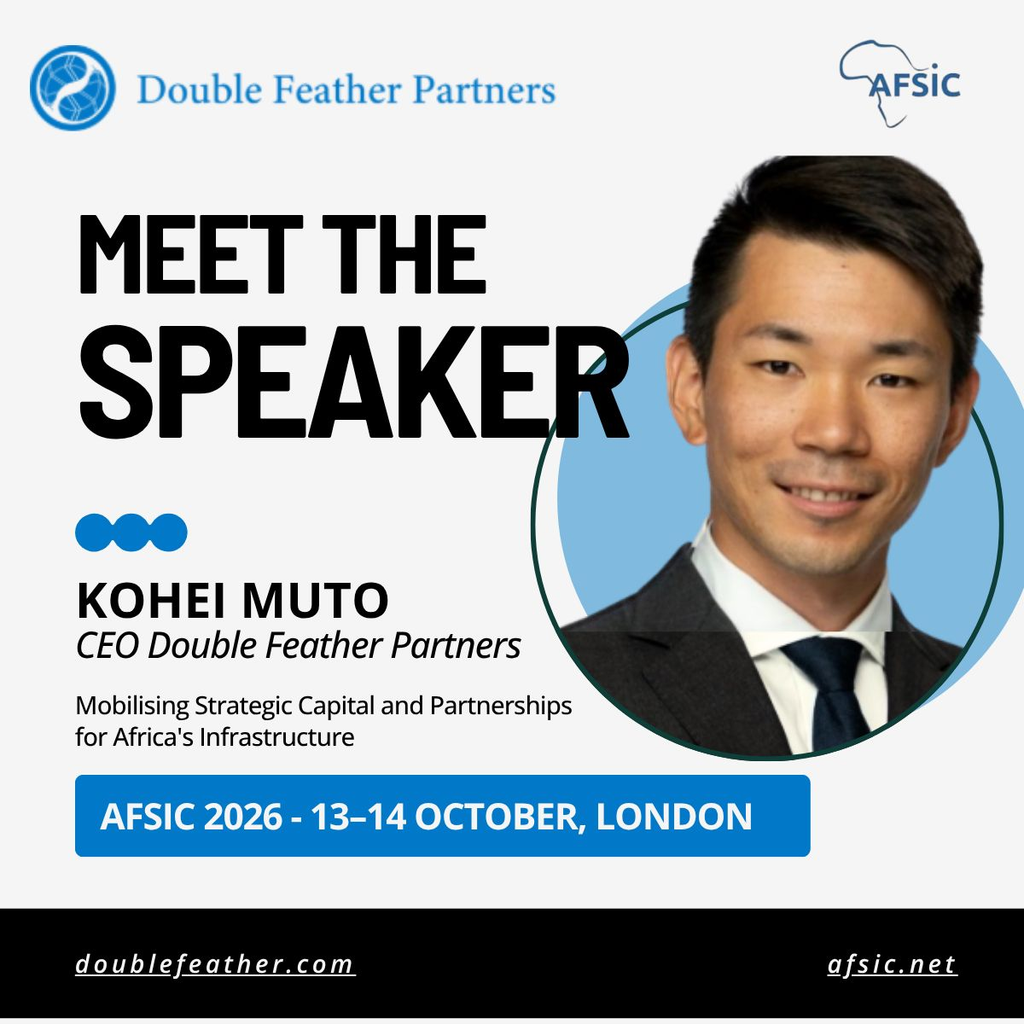
Double Feather Partners CEO Kohei Muto participated in AFSIC: Investing in Africa 2026, held in London on 13 and 14 October. The event brought together investors, financial institutions, business leaders and other stakeholders from across Africa and the international investment community to discuss opportunities and challenges shaping the continent’s investment landscape.
Kohei joined the Infrastructure stream as a speaker in the panel discussion, “Trade, Corridors and Control: Who Owns Africa’s Logistics Backbone?” The session also featured Duncan Onyango, Abraham Durosawo and Geoffrey White, and was moderated by Eva Yazhari.
The discussion examined the relationship between infrastructure development, regional trade and private investment, including how capital can support the transport and logistics networks needed to strengthen economic integration across African markets.
Infrastructure as a Foundation for Regional Trade
Infrastructure plays a central role in determining how effectively African businesses can access markets, move goods and participate in regional and international supply chains. While initiatives such as the African Continental Free Trade Area (AfCFTA) aim to facilitate greater trade integration, the practical benefits depend heavily on the quality and availability of transport corridors, ports, logistics facilities and supporting services.
The panel’s focus on ownership and investment in Africa’s logistics backbone reflected an important question for the continent’s development: how can public and private capital be mobilised to build infrastructure that supports long-term economic activity while creating sustainable investment opportunities?
For investors, infrastructure presents opportunities across a range of asset classes and operating models. However, successful investment requires consideration of regulatory environments, project structures, commercial demand and the coordination of multiple stakeholders.
Connecting Global Capital with African Businesses
Kohei’s participation reflected DFP’s work at the intersection of investment, corporate partnerships and innovation in Africa. DFP focuses on connecting global investors and corporations with African businesses, helping identify commercial opportunities and develop partnerships that can support sustainable growth.
This approach is particularly relevant in infrastructure-related sectors such as logistics and mobility, where technology, physical assets and operating capabilities must come together. African technology companies can contribute new solutions to longstanding challenges, while established corporations and international investors can provide market access, expertise and capital.
Blended and catalytic finance can also play a role in addressing investment barriers, particularly where early-stage risks or infrastructure requirements make conventional financing difficult to secure. By combining different sources of capital and aligning them with commercial opportunities, stakeholders can help mobilise private investment into sectors with significant long-term potential.
Moving from Investment Dialogue to Practical Collaboration
AFSIC provides a platform for investors and African businesses to exchange perspectives, develop relationships and explore opportunities across the continent. For DFP, participation in discussions of this kind is part of a broader commitment to building connections between international capital, corporate partners and African enterprises.
The future of Africa’s infrastructure will depend not only on the scale of capital available, but also on how effectively that capital is connected to viable projects, capable operators and the needs of local markets. DFP looks forward to building on the conversations at AFSIC 2026 and continuing to support investment and commercial collaboration across Africa.