
Africa Startup M&A Watch | Vercel Acquires Better Auth and Stakpak
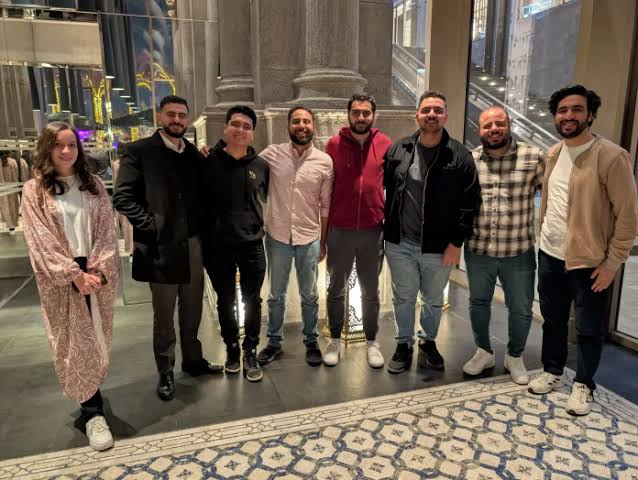
U.S.-based cloud platform Vercel, the company behind Next.js, has completed two acquisitions in just over a week that together point towards an important direction in the development of AI infrastructure.
The acquisitions of Better Auth, an open-source authentication framework founded by Ethiopian developer Bereket Engida, and Stakpak, an Egyptian-founded DevOps startup, give AI agents two increasingly important capabilities: identity and autonomous infrastructure management.
While the two acquisitions address different parts of the technology stack, their combination is particularly interesting as AI systems evolve from tools that assist humans into agents capable of carrying out tasks independently.
Better Auth: Giving AI Agents an Identity
Vercel first acquired Better Auth, an open-source authentication framework founded by Ethiopian developer Bereket Engida.
With more than 4.7 million weekly npm downloads, Better Auth has developed significant adoption among developers building modern applications.
Authentication has traditionally been designed around humans: a user signs into an application, establishes an identity and receives permissions based on their role.
The emergence of AI agents introduces a different challenge.
As agents increasingly perform actions on behalf of users and organisations, they need their own credentials, permissions and identities. An AI agent that can access databases, applications or cloud infrastructure cannot simply operate indefinitely using the identity of the human who deployed it.
Better Auth’s technology therefore addresses an increasingly important layer of the emerging agentic AI infrastructure stack: establishing and managing identity and permissions for software agents.
Stakpak: Enabling Agents to Operate Infrastructure
Just over a week later, Vercel announced its acquisition of Stakpak, an Egyptian-founded DevOps startup.
Stakpak has developed an autonomous infrastructure agent designed to help provision, deploy and manage cloud infrastructure with minimal human intervention.
This addresses a complementary challenge.
If Better Auth provides AI agents with the ability to establish identity and permissions, Stakpak provides an operating layer through which those agents can interact with and manage infrastructure.
Together, the technologies point towards a future in which AI agents can move beyond generating code or recommendations and actually execute technical tasks across the software development and cloud infrastructure lifecycle.
The Pattern Matters
The individual acquisitions are significant, but the broader pattern is more interesting.
Vercel is bringing together two African-founded infrastructure products and their technical teams as part of a major global technology platform.
The transactions demonstrate how African-founded technology companies are increasingly contributing to foundational layers of the global AI ecosystem, rather than simply building applications for African markets.
Both Better Auth and Stakpak operate in technically sophisticated areas of the technology stack. Their relevance extends well beyond their countries of origin, addressing infrastructure challenges that are becoming increasingly important as software development and cloud operations become more automated.
This is an important evolution in the African startup ecosystem.
From Local Innovation to Global Infrastructure
African technology companies have often been evaluated primarily through the lens of their local market opportunity: payments, commerce, mobility, financial inclusion and other sectors where the continent’s structural challenges create significant opportunities.
However, companies such as Better Auth and Stakpak highlight another pathway for African founders.
Deep technical expertise can produce products that solve global infrastructure problems from the outset.
In these cases, the addressable market is not limited by geography. Developer tools, cloud infrastructure and AI technologies can be adopted anywhere developers and businesses are building software.
The resulting companies can therefore become acquisition targets for global technology platforms looking to accelerate their own capabilities.

DFP Perspective
At Double Feather Partners, the wider signal from these transactions matters as much as the acquisitions themselves.
Two African-founded infrastructure products and their technical teams are becoming part of a major global AI platform at a moment when the architecture of AI is rapidly evolving.
The acquisitions reinforce our view that African founders are increasingly capable of building foundational technologies with global relevance.
As AI agents become more autonomous, infrastructure around identity, security, permissions, deployment and operations will become increasingly important. The companies building these layers can occupy strategically important positions within the emerging AI stack.
For Africa’s technology ecosystem, this is an encouraging signal.
It demonstrates that African technical talent is not only capable of building applications adapted to local markets, but also of developing deep infrastructure products that can become part of global technology platforms.
The next generation of African startup success stories may therefore increasingly come from companies operating beneath the visible application layer, building the infrastructure that enables the next wave of AI and software.
Congratulations to Guillermo Rauch, Bereket Engida, George Fahmy and their respective teams on these milestones.