
Accelerating Corporate E Mobility in Kenya: From Commitment to Implementation
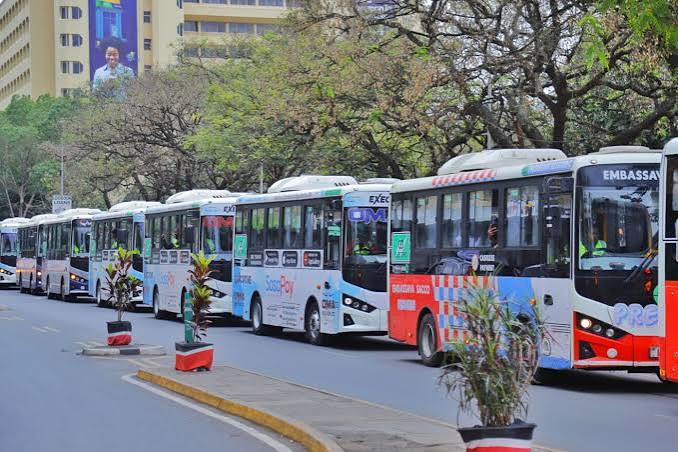
Kenya’s electric mobility market has grown from approximately 600 EVs in 2022 to more than 35,000 today, signalling a significant shift in the country’s transportation landscape. As adoption moves beyond the early stages, the focus is increasingly turning towards how Kenya can scale electric mobility sustainably and what role businesses can play in accelerating that transition.
Double Feather Partners recently joined the Kenya Corporate E Mobility Webinar, “Accelerating Corporate E Mobility in Kenya: From Commitment to Implementation”, hosted by the Africa E Mobility Alliance (AfEMA), together with GIZ Kenya, CALSTART and Drive to Zero, the Climate Group, and the Electric Mobility Association of Kenya (EMAK).
Corporate Fleets as the Next Growth Driver
One of the key themes from the discussion was the growing role of corporate fleets in Kenya’s EV transition. Commercial fleets can provide a strong starting point for electrification because vehicles often operate on predictable routes and schedules. This makes it easier to plan charging requirements and assess the economics of switching from conventional vehicles to electric alternatives.
For fleet operators, the business case is increasingly being evaluated through total cost of ownership, including fuel and energy costs, maintenance, vehicle utilisation and financing. Centralised charging and predictable daily operations can further improve the economics of fleet electrification and provide companies with greater visibility over operating costs.
The Infrastructure Challenge
As more corporate fleets begin to transition, the need for supporting infrastructure will become increasingly important. Scaling electric mobility will require investment in charging networks, grid capacity, financing solutions, technical skills and maintenance capabilities.
Consistency in policy will also be important for businesses making long term investment decisions. Clear and predictable regulatory frameworks can provide greater confidence to fleet operators, investors and infrastructure providers as the market develops.
From Transport to Economic Infrastructure
The discussions highlighted that Africa’s mobility transition is becoming increasingly connected to broader economic priorities. Electrification can contribute to energy resilience by reducing dependence on imported fossil fuels, while more efficient fleet operations can support logistics and productivity.
The development of local technical skills, charging infrastructure and related services can also create new industrial and employment opportunities. For Kenya, the transition therefore represents more than a change in vehicle technology. It is becoming part of a wider conversation around energy, infrastructure, industrial development and long term economic competitiveness.
Kenya Enters the Scaling Phase
Kenya is moving from early adoption towards a scaling phase for electric mobility. The next stage will depend on whether the ecosystem can develop at the same pace as vehicle adoption. Financing, infrastructure, skills, policy and commercially viable business models will all need to develop alongside the growing number of EVs on the road.
Corporate fleets are likely to play an important role in this process. Their scale, predictable operating patterns and ability to make coordinated infrastructure investments make them well positioned to accelerate adoption.
What We See
At Double Feather Partners, we see the growing focus on corporate fleet electrification as an important development for Kenya’s wider mobility ecosystem. The transition towards electric mobility will create opportunities across vehicles, charging infrastructure, energy, financing, fleet technology, maintenance and other supporting services. For investors and businesses, this creates a growing ecosystem of opportunities around the electrification of transportation rather than a market defined solely by vehicle sales.
We thank the speakers and organisers for contributing to an important discussion on the practical steps required to move Kenya’s electric mobility transition from commitment to implementation.
Warren O. Ondanje, AfEMA
Elijah Oduor, EMAK
Thyla Jay Quickfall, Climate Group
Carol Mutiso, GIZ Kenya
Marumbo Sichinga, CALSTART
Eng. Robert Njoroge, GIZ Kenya
Kenya’s next chapter in electric mobility will be defined not only by how many EVs are deployed, but by how effectively the surrounding ecosystem can scale with them.