
DFP Joins Africa E-Mobility Week 2026 in South Africa
Bringing Capital and Industry Together to Scale Electric Mobility
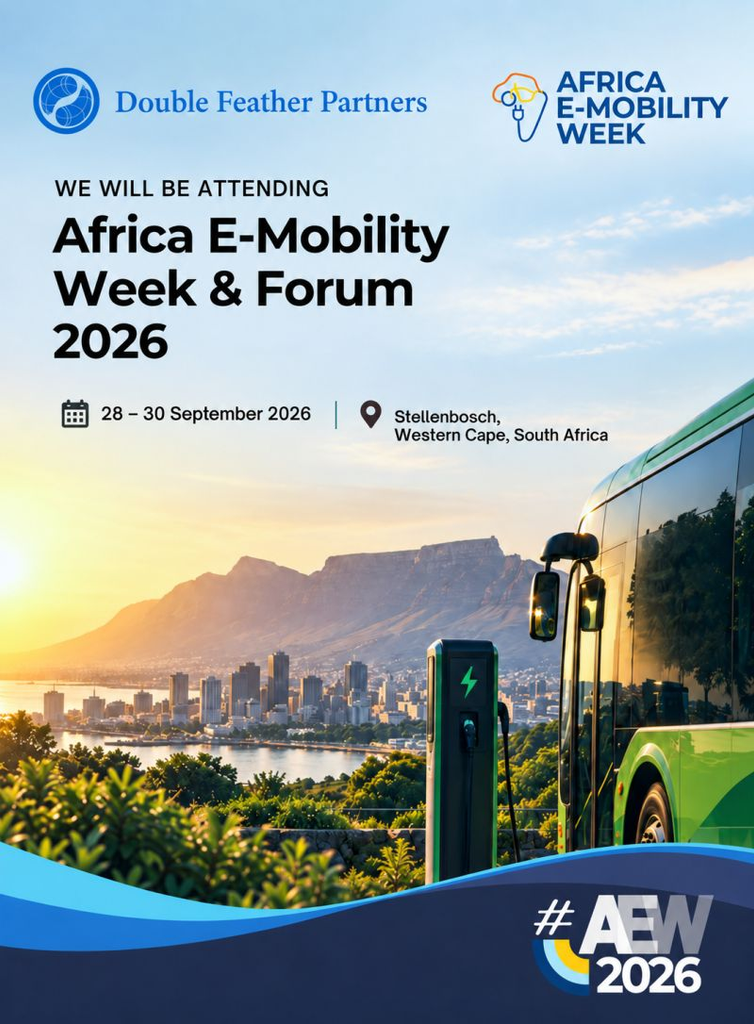
Double Feather Partners participated in Africa E-Mobility Week 2026, held in Stellenbosch, Western Cape, South Africa, from 28 to 30 September. DFP was represented by its CEO, Kohei Muto, joining policymakers, investors, development partners and businesses to discuss the financing, infrastructure and partnerships required to accelerate electric mobility across African markets.
As electric mobility gains traction across the continent, the conversation is increasingly shifting from technology adoption to the conditions needed for sustainable growth. The availability of electric vehicles is only one part of the equation. Businesses also need access to appropriate financing, reliable charging and battery-swapping infrastructure, supportive policy environments and commercial partnerships that enable them to expand their operations.
Africa E-Mobility Week provided a platform for stakeholders across the ecosystem to exchange perspectives on these interconnected challenges and explore opportunities for collaboration.
Financing the Infrastructure Behind the Transition
A central focus for DFP was how electric mobility businesses can access capital suited to their different stages of development and operating requirements. Expanding a vehicle fleet, establishing charging infrastructure and building battery-swapping networks all require significant investment, but each involves different asset profiles, revenue models and financing considerations.
For early-stage businesses, access to growth capital can help establish operations and demonstrate commercial viability. As companies expand, however, financing needs become more complex, particularly when investment must support physical assets such as vehicles, batteries and energy infrastructure. Aligning financing structures with these requirements is important to ensure that businesses can grow without placing unsustainable pressure on their operations.
The participation of investors and development finance institutions is therefore important in helping bridge the gap between promising mobility solutions and the capital needed to deploy them at scale.
Connecting Investment with Commercial Implementation
These discussions align closely with DFP’s work through the Africa Mobility Innovation Fund and its corporate innovation programmes. Through these initiatives, DFP seeks to support commercially viable mobility businesses by connecting them with suitable capital, strategic partners and opportunities to develop solutions that respond to local market needs.
The focus extends beyond financing individual companies. Building a sustainable electric mobility ecosystem requires coordination among vehicle manufacturers, mobility operators, energy providers, financial institutions and corporate partners. Collaboration across these groups can help address operational barriers, improve infrastructure utilization and create business models that are both commercially sustainable and accessible to customers.
This is particularly relevant in African markets, where affordability and reliability remain essential considerations for the adoption of electric transport.
Building the Next Generation of African Mobility Businesses
Africa E-Mobility Week 2026 provided an opportunity to strengthen relationships with investors, entrepreneurs, policymakers and development partners working across the sector. For DFP, these exchanges are part of a broader effort to connect international capital and expertise with African businesses that are developing practical solutions to the continent’s mobility challenges.
The next phase of electric mobility growth will depend not only on the number of vehicles deployed, but also on the strength of the businesses and infrastructure supporting them. DFP looks forward to building on the discussions in Stellenbosch and identifying further opportunities for investment and collaboration across Africa’s mobility sector.