
Japan–Kenya Samurai Loan Adds Momentum to Africa’s Mobility Transition
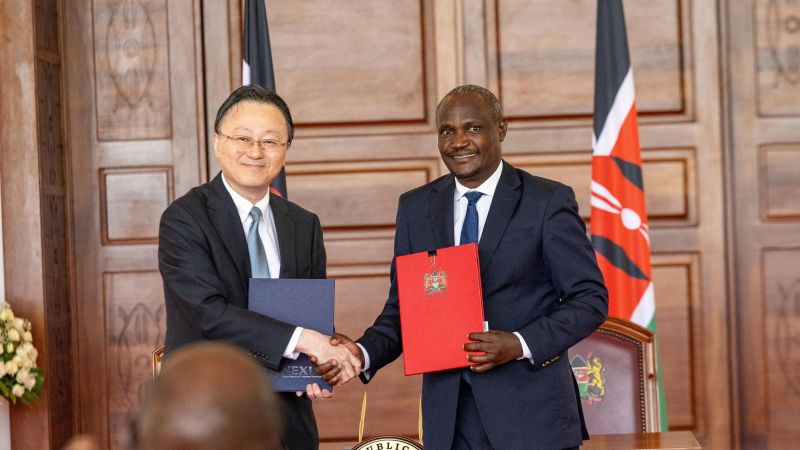
Kenya and Japan have formalized an approximately $170 million Samurai loan, backed by Nippon Export and Investment Insurance (NEXI), providing further momentum to Kenya’s ambitions around automotive manufacturing, industrial development and the transition towards electric mobility.
Of the total financing, approximately $101 million is earmarked for Kenya’s National Automotive Policy, with a focus on expanding local vehicle assembly, increasing local value addition and creating skilled employment across the automotive sector.
The financing comes at an important time for Kenya’s mobility industry. The country is seeking to strengthen its domestic automotive capabilities while also accelerating the adoption of electric vehicles and developing the infrastructure and skills needed to support a more sustainable transportation system.
Linking Mobility and Industrial Development
The National Automotive Policy is significant because it positions the automotive sector as more than a transportation industry.
Expanding local assembly and increasing domestic value addition can support the development of a broader industrial ecosystem, including component manufacturing, engineering, logistics, maintenance and technical services.
It can also create opportunities for skills development and employment as Kenya builds the capabilities required to participate more deeply in the automotive value chain.
For electric mobility, this creates an opportunity to connect the transition towards cleaner transportation with broader industrial objectives.
Rather than relying solely on imported vehicles, Kenya has the potential to develop local capabilities around the production, assembly, servicing and operation of electric vehicles and their supporting infrastructure.
A Further Push for Electric Mobility
The financing is complemented by Kenya’s announcement that the first 100,000 imported electric vehicles will be duty-free.
The combination of incentives for EV adoption and investment in domestic automotive capacity could help accelerate the development of Kenya’s electric mobility market.
Lower import costs can support early adoption and help expand the number of electric vehicles on the road. At the same time, investment in local manufacturing and value addition can help build the industrial capabilities required for the market to mature.
Together, these measures create a stronger foundation for an ecosystem that includes vehicle manufacturers, charging providers, battery and energy companies, fleet operators, financing platforms, technology businesses and other mobility service providers.
Beyond Transport and Climate
The transition to electric mobility is often framed primarily around reducing emissions.
While this remains an important objective, the potential impact extends further.
Kenya currently depends heavily on imported petroleum products to power its transportation system. Increasing the use of electricity for mobility can therefore contribute to energy security and reduced dependence on imported fuel, particularly as Kenya continues to develop its renewable-energy generation capacity.
Electric mobility can also create new industrial opportunities.
Charging infrastructure, battery management, fleet software, vehicle servicing and other supporting technologies will all be required as EV adoption increases. Developing these capabilities locally can allow more of the economic value created by the transition to remain within Kenya.
The result could be a mobility transition that supports not only climate objectives, but also industrial development, energy resilience, job creation and technological innovation.
The Importance of Japan–Africa Collaboration
The Samurai loan is also a strong example of the role that Japan can play in supporting Africa’s mobility transition.
Japan brings deep expertise across automotive manufacturing, technology, financing and industrial development. Kenya, meanwhile, offers a growing mobility market, an increasingly sophisticated technology ecosystem and significant potential for electric mobility.
The combination creates opportunities for collaboration across the full mobility value chain.
Japanese financial institutions and corporates can support investment, technology transfer and industrial development, while African businesses and entrepreneurs can develop locally relevant solutions adapted to the realities of African markets.
Turning Policy Momentum into Businesses
The next challenge will be translating policy and financing momentum into commercially sustainable businesses.
Government incentives and large-scale financing can help create the conditions for market development, but private companies will ultimately be responsible for building the products, infrastructure and services that make electric mobility practical for consumers and businesses.
This includes financing solutions for vehicle owners and fleet operators, charging networks, battery services, fleet-management technology, maintenance and after-sales support.
The opportunity is therefore not limited to vehicle manufacturers. A much broader ecosystem of African businesses can participate in the transition.

What We See
At Double Feather Partners, we see the Japan–Kenya financing package as an important example of how public policy, development finance and private-sector innovation can reinforce one another.
Through the Africa Mobility Innovation Fund, DFP supports early-stage businesses across mobility, logistics, electric vehicle infrastructure and related financing models.
Our focus is on helping businesses translate the growing momentum around Africa’s mobility transition into scalable, locally led solutions.
Kenya’s combination of automotive policy, EV incentives, renewable-energy potential and international partnerships creates an increasingly compelling environment for this ecosystem to develop.
The Samurai loan and the accompanying automotive policy measures provide an important foundation. The next step is to ensure that entrepreneurs, investors, manufacturers and technology providers have the capital and partnerships required to build on it.
For us, this is precisely where Japan–Africa collaboration can create meaningful long-term value, connecting Japanese capital and expertise with African businesses building the next generation of mobility and logistics systems.