
Africa Mobility Watch | Bingo Technologies Enters Kenya with Battery-Swapping EV
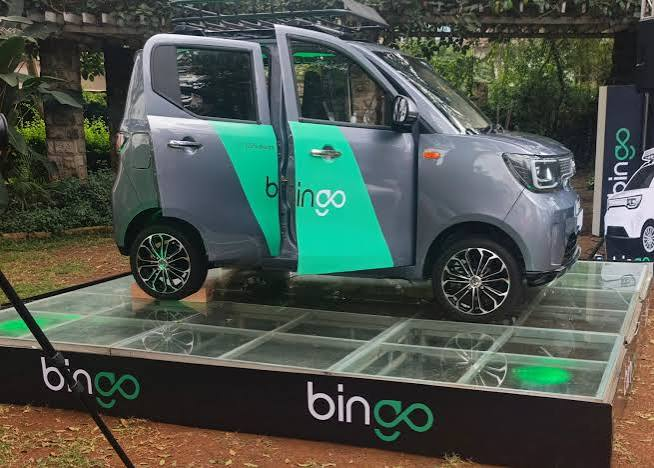
California-based EV startup Bingo Technologies, founded by mophie founder Daniel Huang, has entered the Kenyan market with its E2 electric vehicle, bringing a battery-swapping model to Kenya’s passenger EV segment and opening reservations for a vehicle designed specifically with ride-hailing and last-mile delivery operators in mind.
The launch comes as Kenya’s electric mobility market continues to develop, with growing interest in electric two- and four-wheelers, charging infrastructure and new business models designed to address the practical challenges of operating EVs in African markets.
Bingo’s proposition extends beyond the vehicle itself. The E2 is being introduced as part of a broader ecosystem that combines a dual-battery vehicle, battery-swapping and fast-charging infrastructure, fleet-management software and financing options.
The company says it plans to establish local assembly in Kenya and is targeting approximately 1,500 vehicles in 2027, with an ambition to have 10,000 vehicles on Kenyan roads by the end of 2028.
Designing EVs Around Commercial Use
Bingo’s focus on ride-hailing and last-mile delivery is particularly relevant to the Kenyan market.
Commercial drivers depend heavily on vehicle utilisation. Time spent waiting for a vehicle to charge can directly affect earnings, making charging speed and infrastructure availability critical considerations when choosing between electric and conventional vehicles.
Battery swapping offers a potential alternative by allowing a depleted battery to be exchanged for a charged one, reducing the amount of time a vehicle needs to remain stationary.
The E2’s dual-battery configuration, combined with planned swapping and fast-charging infrastructure, is therefore designed around the operational requirements of high-utilisation fleets rather than solely around private passenger use.
For ride-hailing and delivery operators, the economics of EV adoption will ultimately depend on factors including vehicle cost, financing, energy costs, utilisation, maintenance and downtime. Integrating these elements into a single proposition could help address some of the barriers that have slowed EV adoption among commercial fleets.
Building the Ecosystem Around the Vehicle
Bingo’s planned entry into Kenya also illustrates a broader development in Africa’s electric mobility market.
As the sector moves beyond the early stages of adoption, the competitive advantage of EV companies is increasingly likely to depend on what sits around the vehicle.
Vehicles require reliable energy infrastructure. Commercial fleets require software to monitor and optimise operations. Drivers and fleet owners need financing products that reflect the economics of EV ownership. Manufacturers need servicing and maintenance networks, while governments and investors need to consider the infrastructure required to support larger electric fleets.
This means that successful EV businesses may increasingly look less like traditional automotive manufacturers and more like integrated mobility platforms.
Bingo’s model brings several of these components together: the vehicle, energy infrastructure, fleet software and financing.
Local Assembly and the Kenyan Market
The company’s plans for local assembly are also significant.
Local production can potentially reduce logistical costs, develop local technical capabilities and create opportunities for Kenyan suppliers and service providers to participate in the emerging EV value chain.
If Bingo reaches its stated targets of 1,500 vehicles in 2027 and 10,000 vehicles by the end of 2028, the resulting fleet could provide a meaningful base from which to develop supporting infrastructure and services.
The scale-up will also provide an important test of whether battery swapping can become commercially viable for passenger and commercial EVs in Kenya.
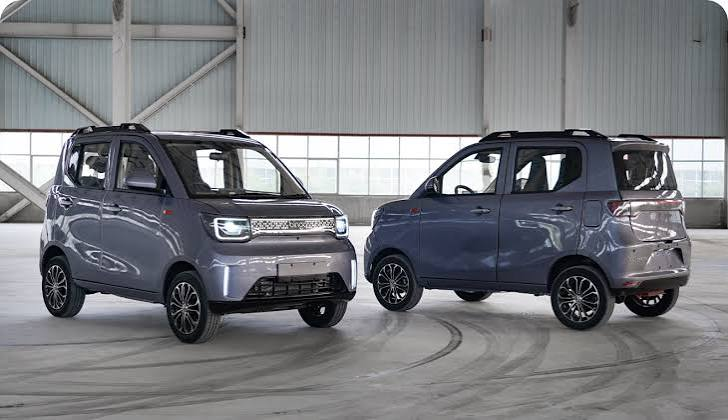
DFP Perspective
At Double Feather Partners, we see Bingo Technologies’ entry into Kenya as another signal that Africa’s EV market is entering a new phase.
The early conversation around electric mobility in Africa often centred on vehicle availability and purchase prices. Increasingly, the more important question is whether the surrounding ecosystem can make EVs commercially viable at scale.
That ecosystem includes energy infrastructure, battery management, fleet software, financing, maintenance and local manufacturing.
For commercial users in particular, EV adoption will be driven by economics and operational efficiency. The vehicles need to generate sufficient value for drivers and fleet operators, while charging and battery infrastructure needs to minimise downtime and provide predictable operating costs.
Bingo’s approach reflects this shift by combining the vehicle with the infrastructure and services required to operate it.
Kenya is well positioned to be an important market for this next stage of African electric mobility. The country has an active technology ecosystem, a large commercial motorcycle and vehicle market, growing renewable-energy capacity and increasing interest from international EV companies and investors.
The coming years will show which business models can translate that potential into sustainable scale.
Africa’s EV market is entering a new phase, where success will depend as much on the supporting ecosystem as on the vehicles themselves.