
Ethiopia: Tailwinds for EV Promotion as Massive Hydropower Dam Completed (October 8, 2025)
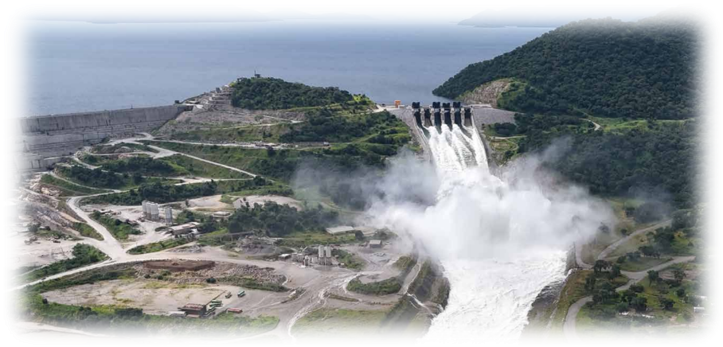
1. Ethiopia’s National Project “GERD” Completed
On September 9, 2025, Ethiopian Prime Minister Abiy Ahmed held an inauguration ceremony of the Grand Ethiopian Renaissance Dam (GERD). The project was initiated by the state-owned Ethiopian Electric Power (EEP) in 2011, with Italy’s construction giant Webuild S.p.A. (formerly Salini Impregilo S.p.A.) contracted under an EPC (Engineering, Procurement, and Construction) agreement.
Located about 700 kilometers northwest of Addis Ababa, near the Sudanese border along the upper reaches of the Blue Nile, the GERD spans 1.8 kilometers in width, stands 170 meters tall, and has a storage capacity of 74 billion cubic meters. Two hydropower plants have been installed on both sides of the dam, giving it a total generation capacity of 5,150 MW—surpassing Ethiopia’s existing total capacity of 4,460 MW and roughly equivalent to Japan’s Shikoku Electric Power Company (5,336 MW).
2. 100% Renewable Energy
According to EEP, even before GERD’s full operation, Ethiopia’s energy mix was already 100% renewable, comprising 91% hydropower, 7% wind, 1% geothermal, and 1% biomass. The country’s future generation plans remain dominated by renewable sources, particularly hydropower, wind, geothermal, solar, and biomass.
3. Petroleum Imports Straining Foreign Exchange
Meanwhile, Ethiopia continues to suffer from a large trade deficit, with petroleum product imports severely straining its foreign exchange position. In fiscal year 2023/24, exports totaled USD 3.8 billion, while imports reached USD 18.4 billion, resulting in a deficit of USD 14.6 billion. While exports are dominated by primary goods such as coffee, flowers, pulses, and oilseeds, petroleum imports alone accounted for around USD 3.5 billion, nearly matching the country’s total export value.
With a population of 130 million, the second largest in Africa after Nigeria, Ethiopia’s population is projected by the United Nations to reach 230 million by 2050 and 370 million by 2100. Should gasoline and diesel vehicles continue to proliferate, the rising demand for imported petroleum could further undermine the country’s already fragile macroeconomic stability.
4. Will High Renewable Energy Ratios Accelerate EV Adoption in Africa?
In response, the Ethiopian government has been promoting electrification of transport (EV adoption). Following its sovereign default in December 2023, the government announced in January 2024 a ban on vehicle imports except for EVs. Reports suggest that around 100,000 EVs are already on Ethiopian roads, and in Addis Ababa, ride-hailing apps now frequently dispatch electric vehicles.
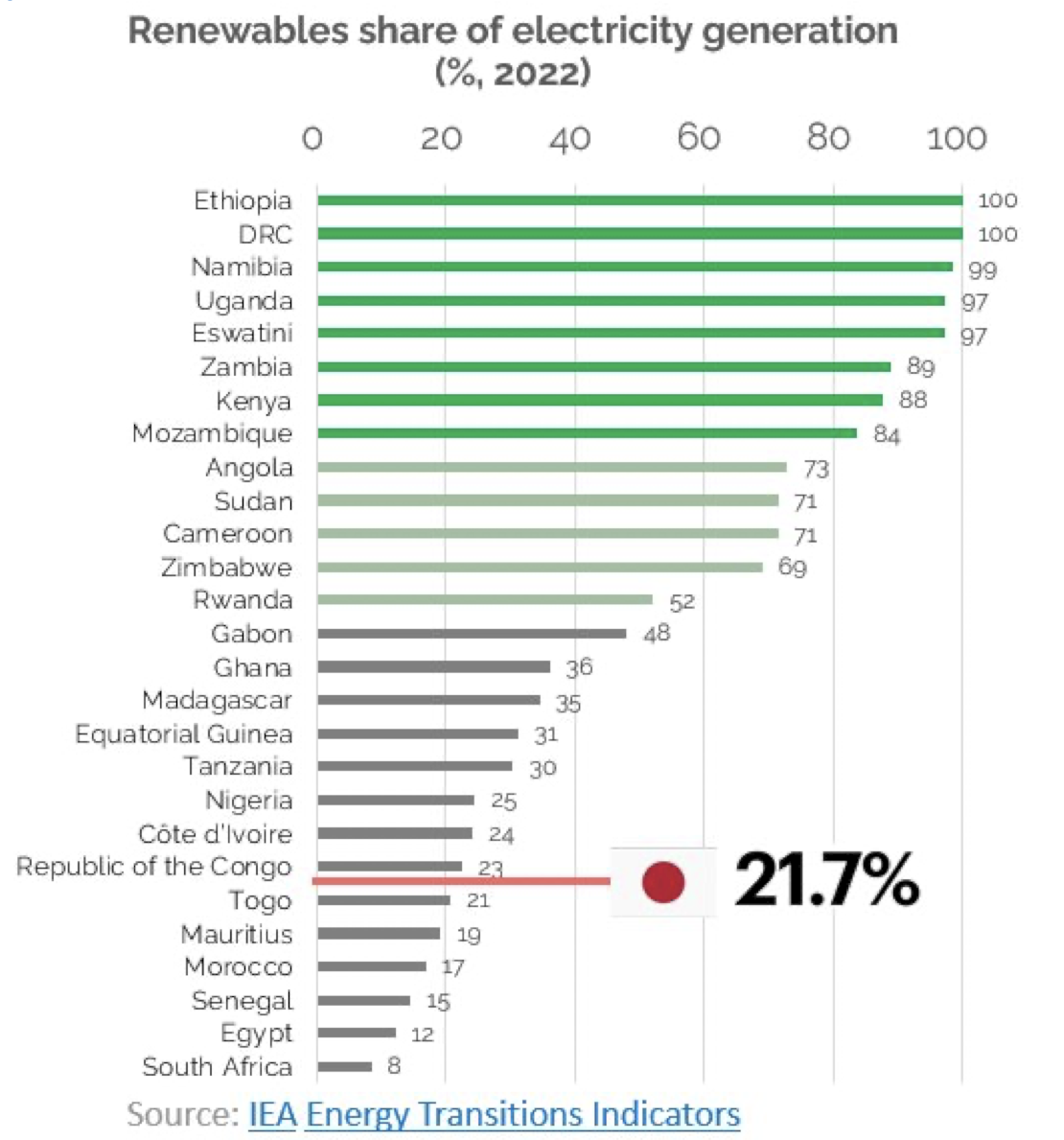
According to the International Energy Agency (IEA), Africa currently has eight countries where renewables account for over 80% of electricity generation, and thirteen countries where the share exceeds 50% (see chart). Given their heavy reliance on renewable energy, such African nations may see EV adoption progress faster than expected in the coming years.
Contact
Double Feather Partners Inc. – Insights & Strategic Planning Department
Satoshi Nakagawa, Albert Mbithi, Emma Kiserema <insight@doublefeather.com>
Disclaimer
This document has been prepared by Double Feather Partners Inc. solely for informational purposes and does not constitute an offer, solicitation, or recommendation to purchase, sell, or hold any specific securities, financial products, or investment strategies. The opinions, forecasts, and views expressed herein reflect the judgment of the author(s) at the time of publication and are subject to change without notice. While efforts have been made to ensure the accuracy and completeness of the information contained in this report, no guarantee is provided. Readers are advised to make investment decisions at their own discretion and responsibility.
Sources: Ethiopian Electric Power (EEP), IEA, Webuild, and local media/information sources